
Beyond Accessibility — Reimagining Cultural Identity in Senior Living
As the aging population in the U.S. and global markets continues to grow, traditional senior living architectural design models are facing a critical gap. For decades, design has prioritized basic ADA compliance over the psychological and cultural needs of the resident. At B+A Architecture, we believe the next generation of wellness senior living must move beyond mere accessibility to embrace Cultural Identity—creating environments where seniors don't just reside, but thrive through emotional resonance and technical innovation.

01
The Challenges in Current Senior Design
The "Clinical Box" Gap: Many facilities feel like medical institutions, prioritizing hygiene and efficiency over personal warmth, dignity, and human connection.
The Resort Dilemma: Generic luxury retirement resorts often lack the specialized care infrastructure and advanced "Smart Care" integration required for long-term health management.
Cultural Disconnect: One-size-fits-all designs often ignore the importance of regional traditions, spiritual practices, and specific family dynamics essential to a sense of belonging.
02
Strategic Solutions: The “Butterfly Effect” (Healing Village)
The Healing Village project was born from a desire to transform the transition into assisted living from an ending into a "rebirth". We utilized an abstract Butterfly Layout to organize the community into a journey of emotional stages: the Cocoon, Transformation, and Freedom.
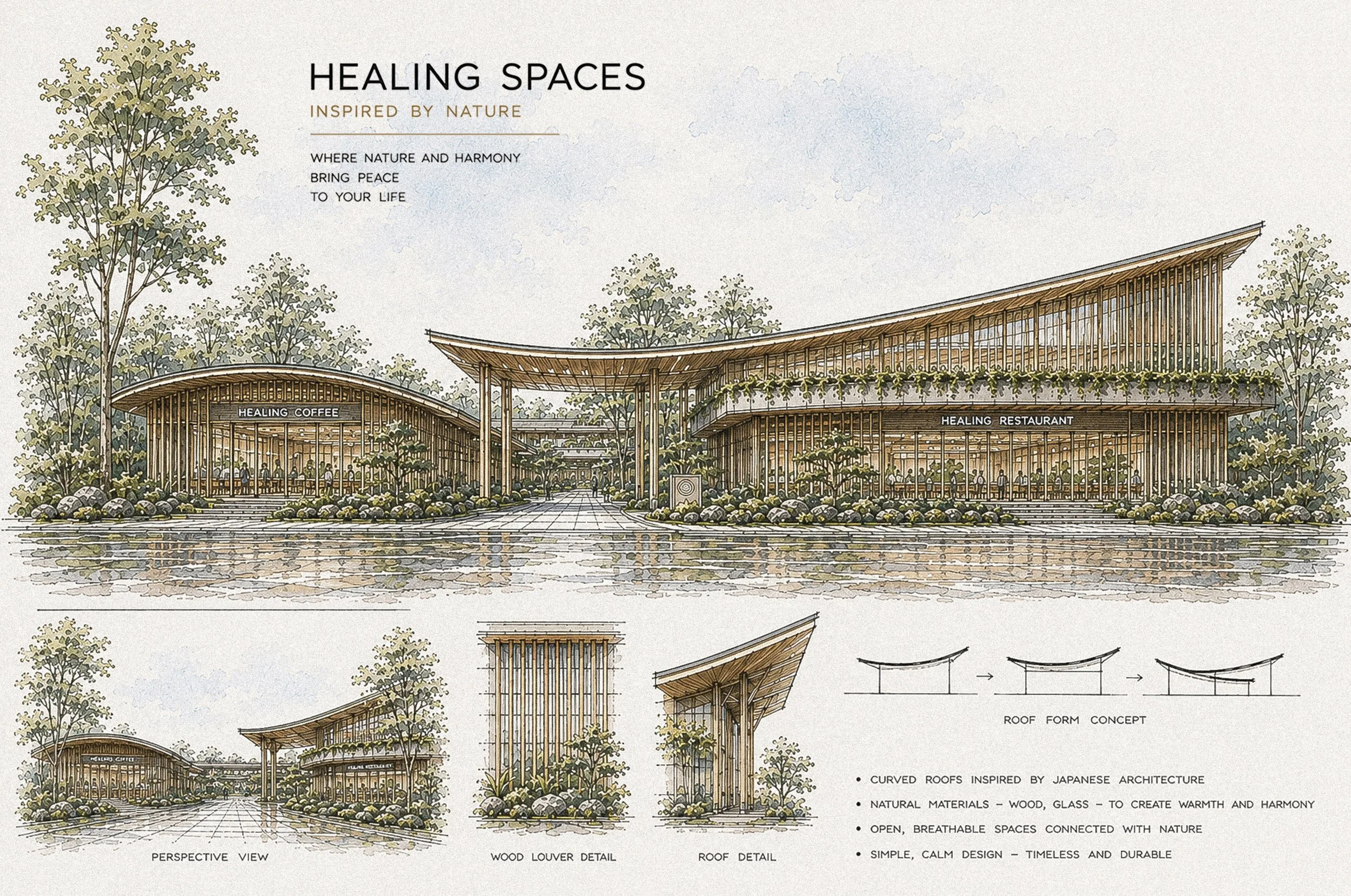
The Journey of Rebirth
The Cocoon (Protection): For residents newly entering the community or those requiring intensive recovery, we designed "Cocoon" spaces. These areas utilize warm color palettes, soft lighting, and a high degree of privacy to create a sense of absolute psychological safety.
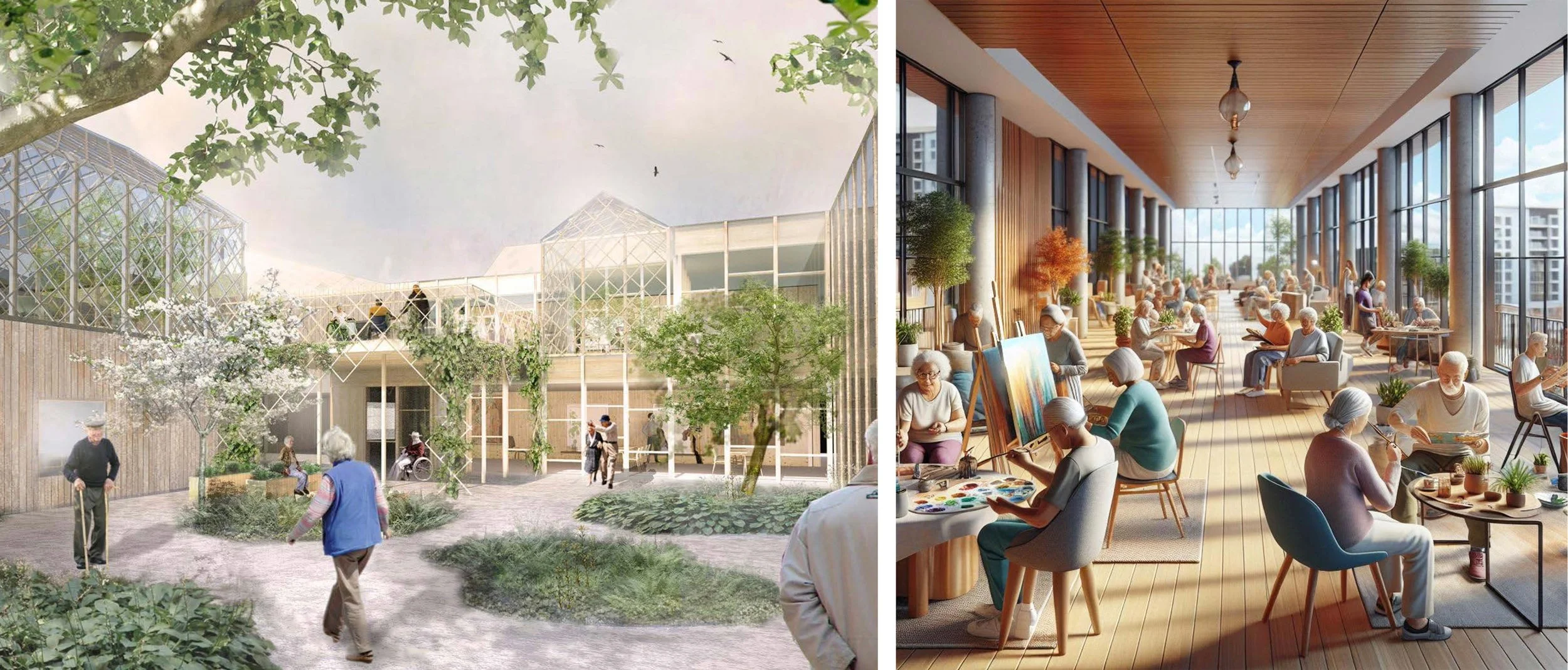
Transformation (Connection): As residents recover their strength, the architecture opens up. The "Transformation" zones focus on therapy and community interaction, utilizing open-plan layouts and increased natural light to encourage social participation.
Freedom (Enjoyment): The final stage of the journey leads to the "Freedom" spaces—expansive gardens and walking loops where residents can enjoy nature and life with full autonomy.
The Healing Courtyard, Memory Walk & Silent Pavilion
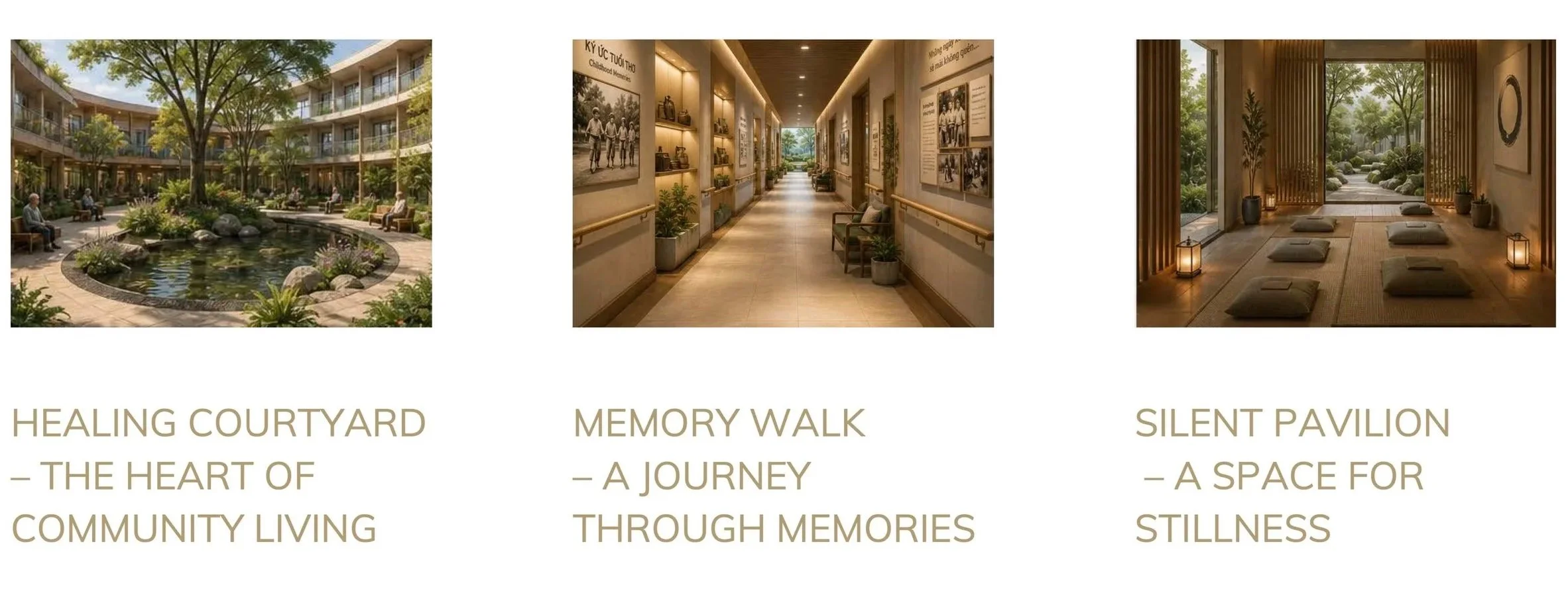
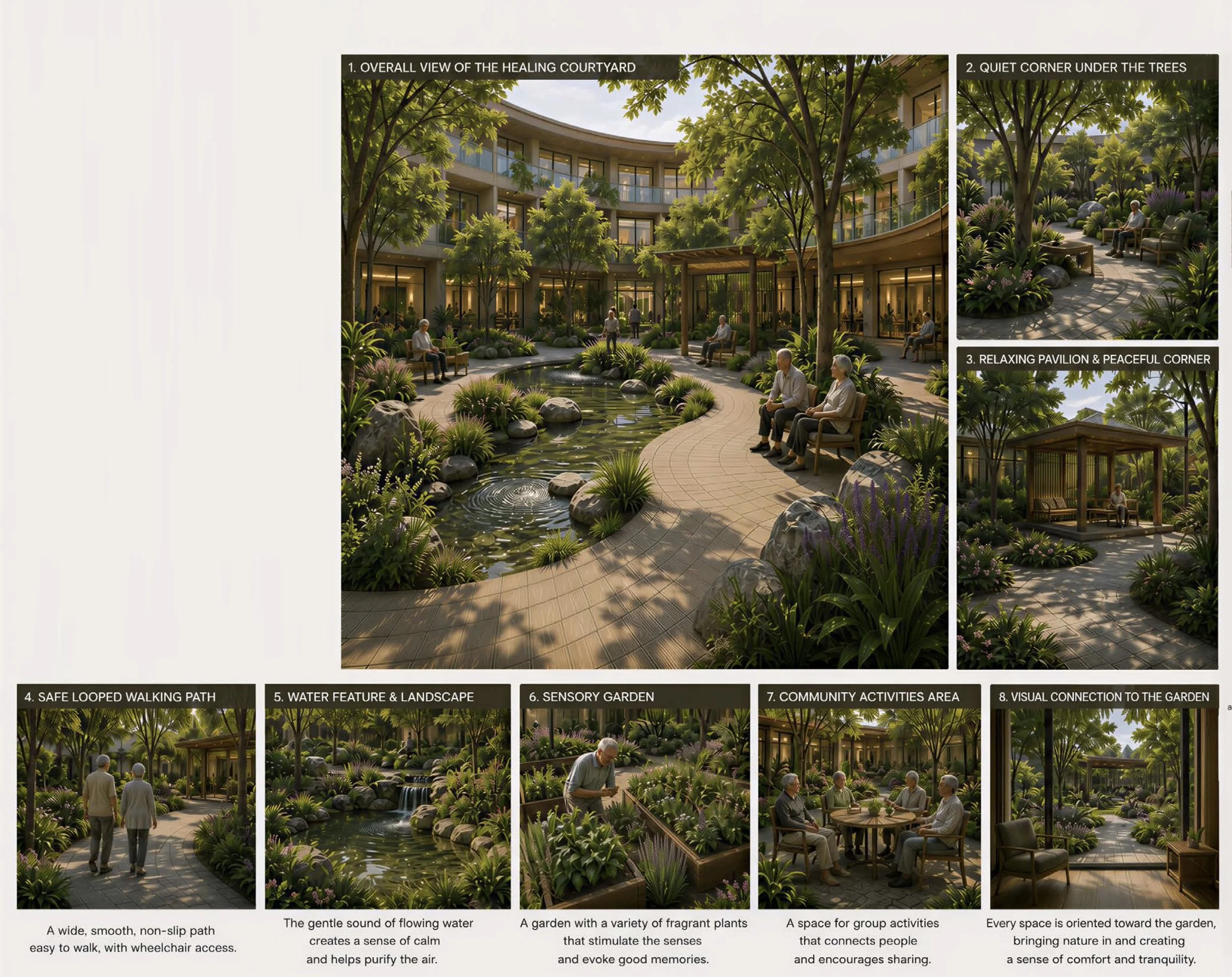
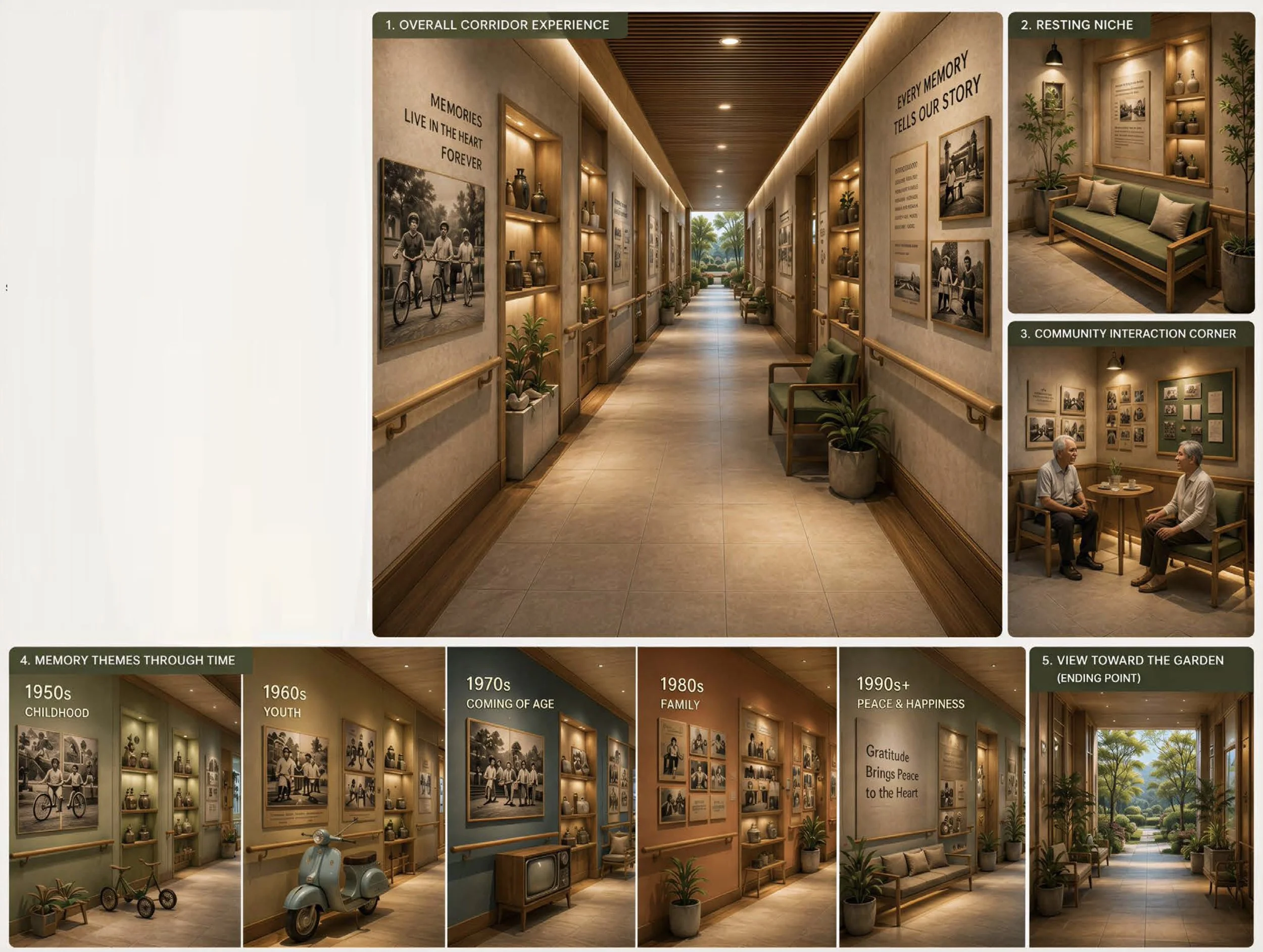
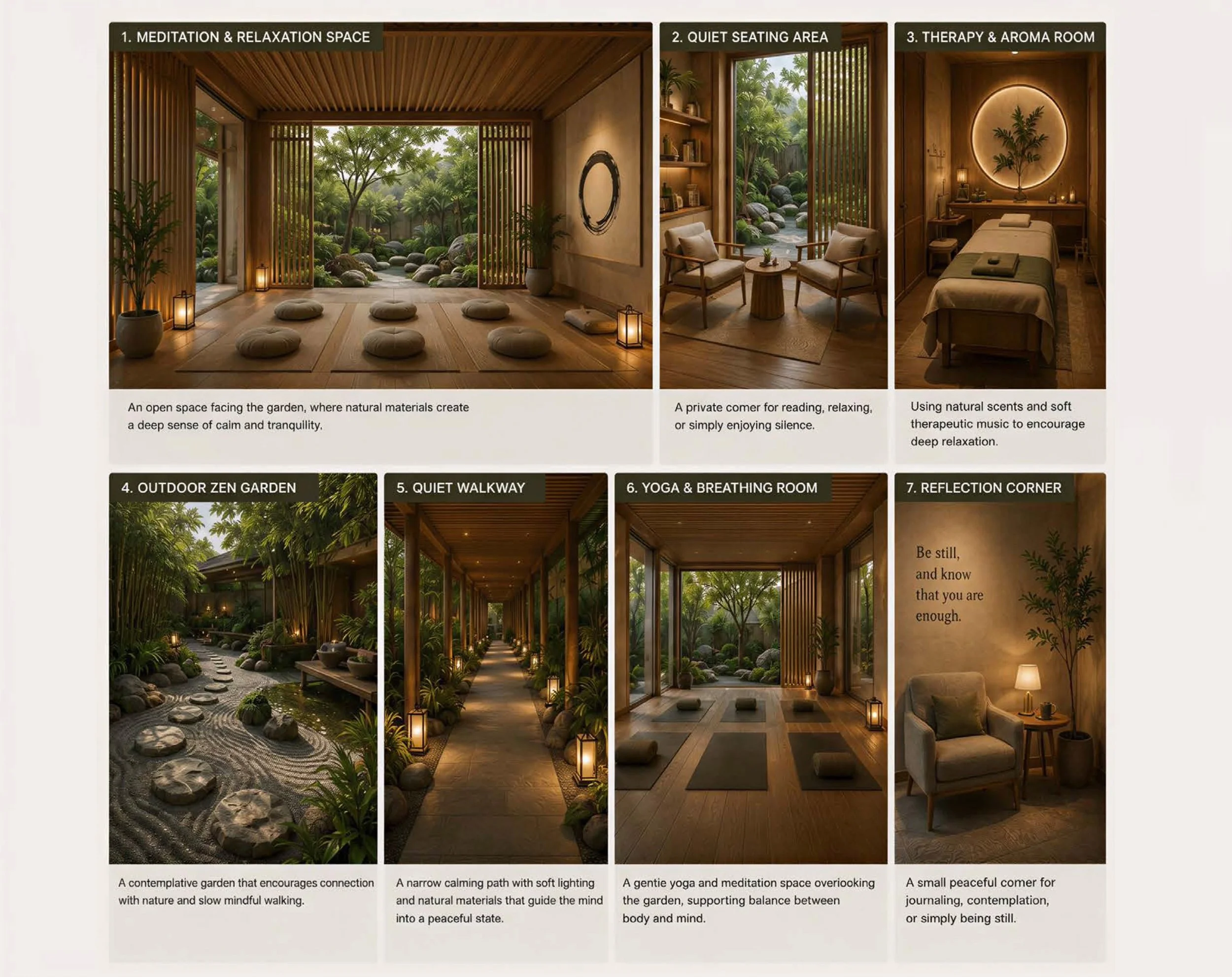
The "Heart" of Healing Village is the Healing Courtyard. In many cultures, the central courtyard is the anchor of the home. Here, it acts as a "Life Center" that connects all functional wings. By incorporating a "Memory Walk," sensory gardens, and a "Silent Pavilion" for meditation, we provide architectural anchors that allow residents to reconnect with their past while remaining grounded in the present. This isn't just a garden; it’s a tool for cognitive health and community bonding.
03
Future Horizons: Integrating Smart Care & Thalassotherapy
As the industry evolves, the most successful senior assets are combining nature-based healing with advanced, non-intrusive technology. At B+A Architecture, we track these global movements closely and specialize in implementing these cutting-edge assisted living design trends into our upcoming projects:
Invisible Protection (IoT & AI): The future of safety relies on "Smart Care" ecosystems. By integrating discreet wearables for real-time vitals and AI fall-detection sensors in private spaces, facilities can project a 90% reduction in critical safety risks—all while preserving full resident privacy without the use of intrusive cameras.
Thalassotherapy & Biophilic Design: Incorporating nature-driven wellness—such as specialized seawater and sea-air therapies, biophilic green walls, and sensory courtyard elements—directly addresses respiratory, cognitive, and bone health through environmental design rather than purely clinical intervention.
Barrier-Free Luxury: Implementing Absolute Flat Floors across large-scale developments removes physical thresholds to eliminate tripping hazards while maintaining a premium, hospitality-grade aesthetic that high-end developers and families demand.
Multigenerational Connectivity: To honor cultural family values, modern senior architecture must include family-oriented spaces like BBQ gardens and 5-star standard guest suites, transforming facilities into vibrant destinations for children and grandchildren.
04
The Results
By integrating cultural specificity with advanced technology, B+A Architecture creates senior living ecosystems that achieve measurable wellness and safety outcomes. The implementation of Smart Care 4.0 technology, including AI-driven fall detection and real-time vital monitoring, is projected to reduce safety risks by up to 90% while maintaining resident privacy. Furthermore, biophilic design and therapeutic landscapes, such as sensory gardens and quiet pavilions, have been shown to reduce cortisol levels by approximately 30%, fostering environments where residents are empowered to live slower and deeper.
These projects redefine market standards by bridging the gap between intensive medical recovery and luxury hospitality, leading to higher occupancy rates and long-term asset resilience. Features like family-oriented gardens and hospitality-grade suites transform these facilities into vibrant multi-generational destinations, strengthening the bond between residents and their families. Ultimately, this approach creates high-demand community anchors that help residents reconnect with their personal identity while providing lasting value for developers and the public.